
Hospitality interior design for your restaurant not to look like others
There are restaurants you remember for their food or service, but an equally important factor is the atmosphere. And some achieve something even more difficult: make you remember how good you felt there.
If when you look at your restaurant you get the feeling that it could be on any other street or that it looks a lot like another one a little further down, perhaps it is time to look at the space with different eyes.
Having a beautiful establishment is not enough, as a restaurant needs personality, coherence and to offer an experience that begins even long before the first course arrives. That is where hospitality interior design comes into play.
When everyone seems to have the same idea
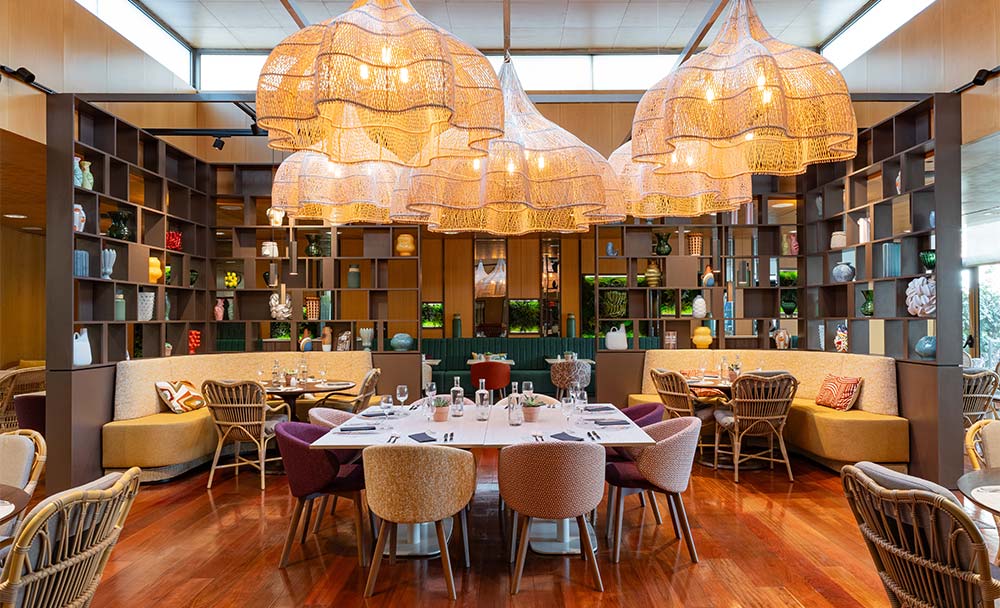
Natural wood, decorative lamps, plants, neutral tones, wooden tables… There are elements that work, but repeating them in every establishment without following an idea or concept behind them can make a restaurant end up looking too much like many others and turn it into a business without personality.
The problem is not following a trend; it is not having anything different to say.
Hospitality interior design stems precisely from that idea: creating spaces that understand the business, its audience and what makes it different. It is not about filling the restaurant with flashy elements, but about making sure that every decision makes sense in relation to what you want to communicate. As a result, the layout, materials, lighting, furniture, colours and even the acoustics can build an identity that is much more powerful than any decorative element placed without further consideration.
Your restaurant also says a lot about you
Before tasting the food or interacting with your team, customers already receive a signal as soon as they enter, even from the façade itself or the reception area. Elements such as the distance between people, the lighting in each corner, the comfort of the seats, the size of the table, the music (or lack thereof), the noise… all of this will create a crucial first impression.
For all these reasons, a restaurant’s design should not be understood as a purely aesthetic matter. A sophisticated restaurant needs its space to convey sophistication. An informal concept may require closeness and spontaneity. And a restaurant that commits to a different kind of cuisine should have a space capable of supporting that proposal.
When the gastronomic concept and the space tell the same story, the experience gains coherence and the result gains strength.
Design so that the customer wants to stay
A good hospitality interior design project is not just about making the space work.
For customers to feel comfortable and want to stay, the passageways need to be natural, privacy must be provided when necessary and they need to feel connected with other customers if they are social spaces. And, staff must be able to work comfortably and move around efficiently. To achieve this, the space or the tables must be well planned and the lighting should accompany every moment of the day. What we are talking about here is an overall feeling.
Personality cannot be bought, it is designed
Often, it is the small details that make a restaurant go from being “just another one” to becoming that place that someone recommends to their friends. But differentiating a restaurant does not mean doing something extravagant; in fact, the most interesting spaces are usually those that have a clear idea and know how to materialise it down to the last detail.
A material, a texture, specific lighting, an unexpected layout or a colour combination can become part of the restaurant’s identity, since the goal is not to impress for five minutes, but to create a recognisable, pleasant space that is coherent with the experience you want to offer. And that is where hospitality interior design adds real value: when it stops being decoration and starts becoming part of the business concept itself.
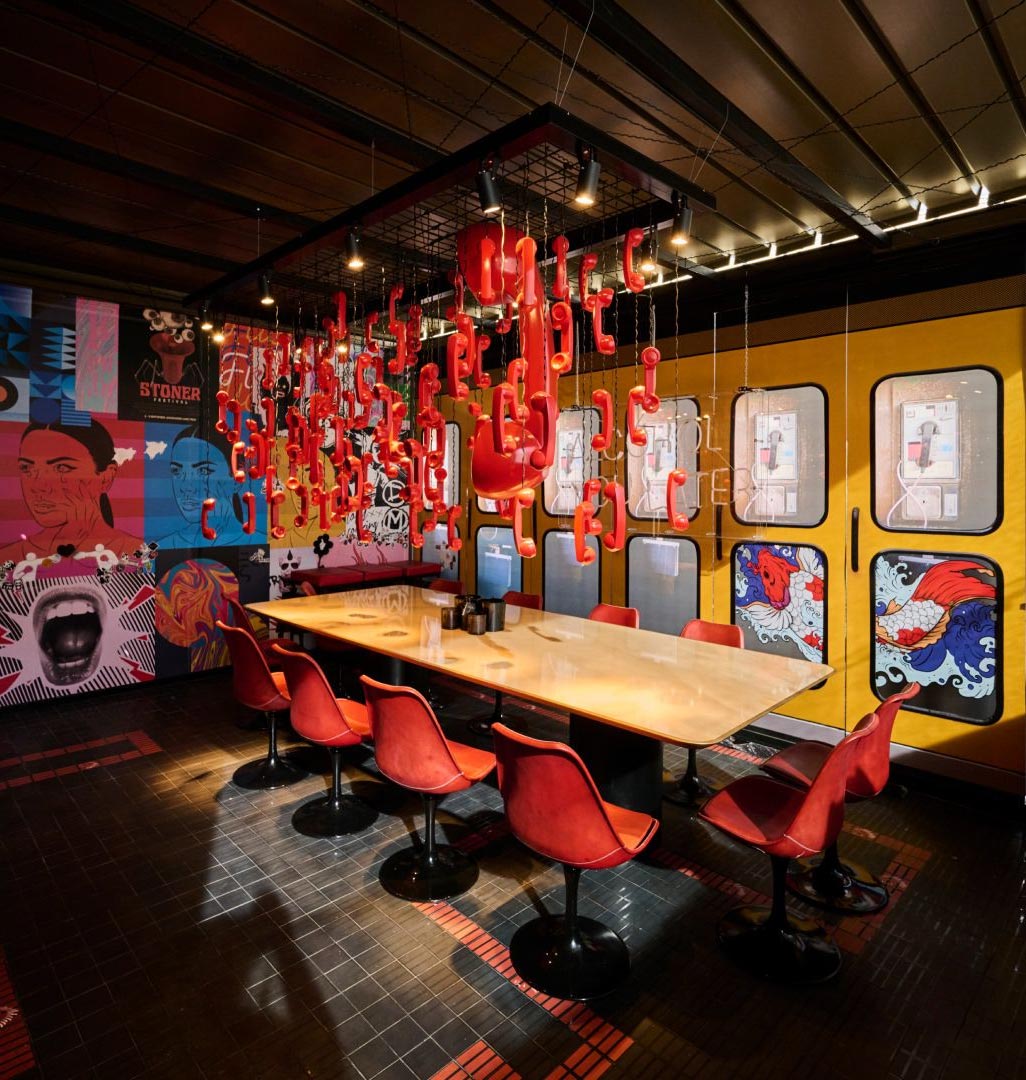
Moinsa offers a different idea for a different restaurant
If you are thinking of opening a restaurant, renovating it or giving it a new look, you might not need to simply change the furniture or renew the colours; you might need to rethink the space from its foundations.
At Moinsa we develop interior design projects for restaurants and hospitality spaces, combining design, functionality and identity to create places that have something to say and, above all, something to remember.